
How could they do that to me?
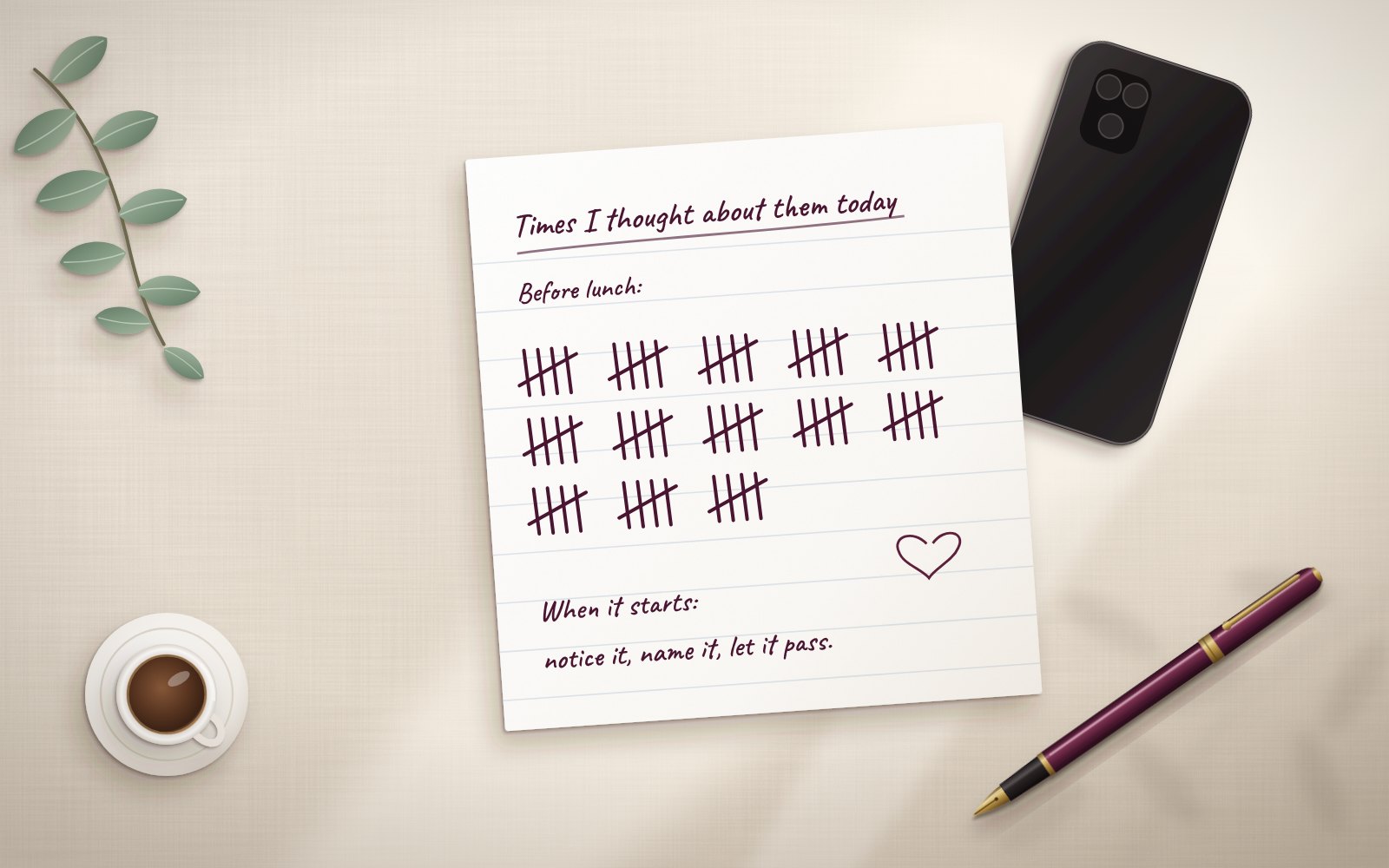
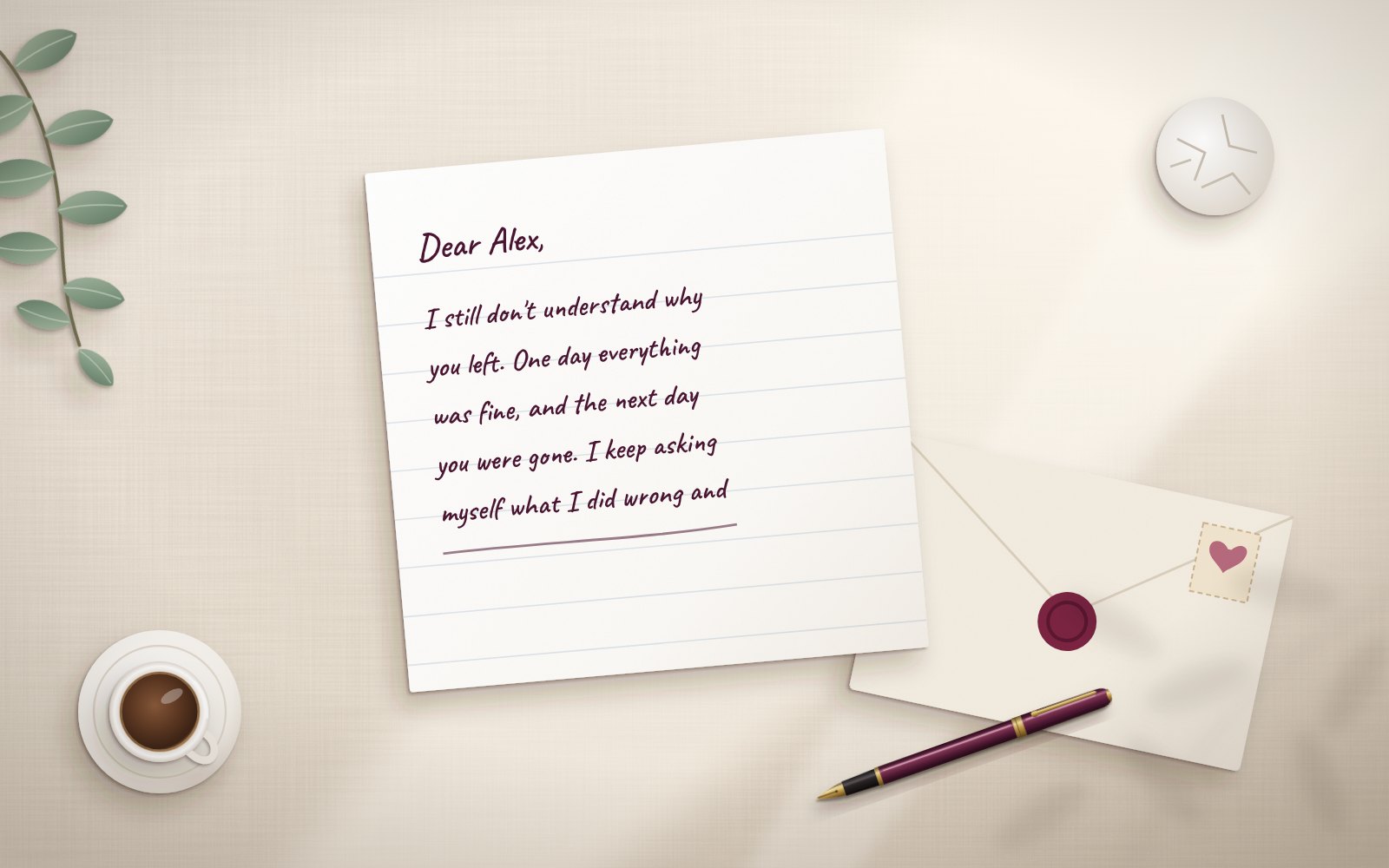
You go over it again. What they said. What they did. How unfair it all was. You win every argument in your head.
And afterwards? You feel worse.
Anger isn’t the problem
Feeling angry after a breakup is normal. Some research even suggests that, early on, anger can help you let go.
The problem isn’t the feeling. It’s what happens when you keep going over the situations that made you angry.
What my research found
In my study of 255 people, I measured something that hadn’t been studied in breakups before: anger rumination. Going over anger-provoking situations. Replaying how badly you were treated.
It turned out to have the second strongest association with breakup grief. Only wanting your ex back was stronger.
People who went over anger-provoking situations also tended to dwell on the reasons for the breakup, and to ruminate in a low, depressed way too.
A trial with no verdict
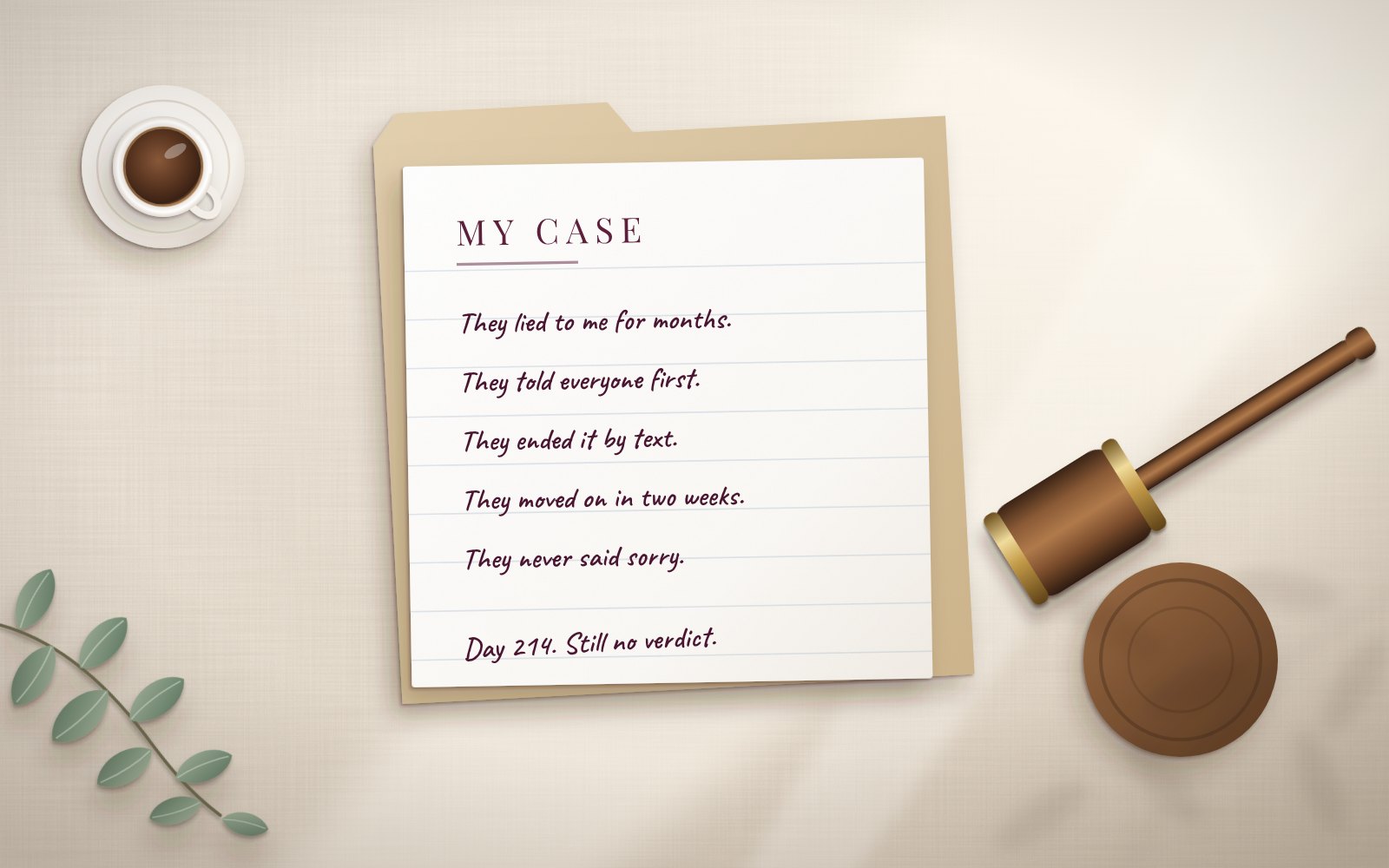
Picture a court case that never ends.
Every night you’re back in the courtroom. You’re the lawyer. You present the evidence again. The texts. The lies. The way it ended. You make your case brilliantly.
But the judge never arrives. There’s no verdict. Your ex isn’t even in the room. And tomorrow night, court is back in session.
That’s anger rumination. A trial with no ending. And the only person serving the sentence is you.
Why we keep replaying it
Because it feels useful. Thoughts like these keep the trial going:
- If I go over it one more time, I’ll finally prove I did nothing wrong.
- If I stay angry, they won’t get away with it.
- If I let it go, it means what they did was OK.
So ask yourself honestly. Has replaying it ever given you a verdict?
Try this
- Spot the trial. When you notice you’re going over it again, say it to yourself: Court’s in session again.
- Ask what the replay is for. Proof? Punishment? Feeling better? Then ask: is it working?
- Feel the anger, skip the replay. You can feel angry without going back into the courtroom. Let the feeling be there. Then do something with your body. Walk. Cook. Call a friend.
- Look at the whole picture. Was every part of it their fault? Sometimes owning even a small share of what went wrong takes the fuel out of the fire.
- Remember what letting go means. It isn’t saying what they did was OK. It’s deciding you’ve served enough time.
If your ex was abusive or violent, what happened was not your fault, and step 4 does not apply to you. Please reach out to a local support service.